Russia’s United Russia Leads Parliamentary Vote as Drones and Cyberattacks Disrupt Election | ChatZyr
By Editorial Desk | Team ChatZyr
Russia’s ruling United Russia party is leading the country’s parliamentary election, with preliminary results showing a large majority for the party as the vote was overshadowed by Ukrainian drone strikes and reported cyberattacks targeting election-related infrastructure.
The election, held from September 18 to 20, is the first parliamentary vote in Russia since Moscow launched its full-scale invasion of Ukraine in February 2022. Preliminary results reported after more than 71% of ballots had been counted put United Russia at 57.5%, followed by the Communist Party at 14% and the LDPR at 8.7%.
The figures are preliminary, and Russia's final certified results were still expected after the initial count.
United Russia Leads Early Results
Russia's State Duma has 450 seats. Half are elected through party-list voting, while the other half are chosen in single-member constituencies.
Early results showed United Russia leading both parts of the contest, putting the party on course to retain its dominant position in the lower house, according to Reuters and Russian state election data.
The Communist Party and LDPR were the next strongest parties in the preliminary party-list count.
A state-run exit poll had earlier placed United Russia at 49.4%, illustrating why the preliminary count should not be treated as the final result.
Election Held During the Ukraine War
The parliamentary election took place during the fifth year of the Russia-Ukraine war.
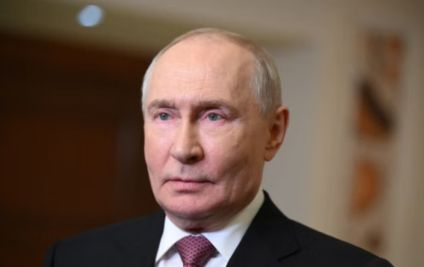
President Vladimir Putin had presented participation in the election as a demonstration of support for Russian troops and national unity. Reuters reported that the Kremlin is expected to present the eventual results as evidence of domestic backing for its policies and its conduct of the war.
At the same time, the political environment surrounding the election has been contested.
Most prominent anti-war candidates were barred from competing, while the liberal Yabloko party was excluded from the federal party-list contest. Some Yabloko candidates were still able to contest individual constituencies.
This means the preliminary vote totals cannot be treated simply as a nationwide referendum on the war without considering who was able to participate and the conditions under which the election was conducted.
Voting Took Place in Occupied Ukrainian Territories
Russia also held voting in Ukrainian territories that Moscow claims to have annexed.
The areas included Crimea, which Russia annexed in 2014, and parts of Donetsk, Luhansk, Zaporizhzhia and Kherson that Russia claimed to annex after the 2022 invasion.
Ukraine rejects Russia's sovereignty claims over these territories, and the United Nations and many governments do not recognise the annexations.
The inclusion of those territories has therefore become another major point of dispute surrounding the election.
Major Drone Attack Hits Moscow Region
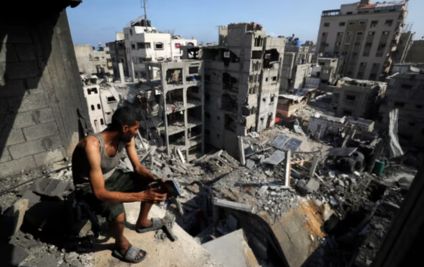
The final voting day coincided with a major Ukrainian drone attack on the Moscow region.
Moscow Mayor Sergei Sobyanin said Russia had intercepted more than 1,600 drones, including around 450 that were heading toward Moscow.
Reuters reported that drones reached the premises of the Moscow oil refinery and that another drone struck a residential building. A facility at the refinery was damaged.
Russian authorities initially reported two deaths in the Moscow region, with a third person later dying from injuries, bringing the regional death toll to three, according to Reuters. Around 400 people, including 70 children, were evacuated from a damaged 21-storey apartment building in Ramenskoye.
Ukraine has not officially claimed responsibility for the specific attack.
Russian officials described the strikes as an attempt to disrupt the election, while Ukrainian attacks on Russian infrastructure have previously been presented by Kyiv as part of its wider campaign against Russian military and energy capabilities.
Cyberattacks Target Election Infrastructure
The physical attacks were accompanied by reports of cyberattacks.
Russia's Central Election Commission said election-related systems had experienced repeated distributed denial-of-service, or DDoS, attacks.
Election chief Ella Pamfilova said more than 1,000 waves of DDoS attacks had targeted infrastructure involved in the electoral process.
Russian authorities did not publicly establish who was responsible for the cyberattacks.
Earlier in the election, Russia also reported attacks against online voting systems in Moscow and an alleged attempt to disrupt communication lines in the country's Far East.
Despite those incidents, Russian election officials said voting continued.
Turnout Approaches 57%
Turnout was another closely watched figure.
Russia's Central Election Commission reported turnout approaching 57% by the evening of the final voting day, according to Reuters.
Turnout can provide information about participation, but interpreting it as a direct measure of support for the war or the government is more complicated because of the limited participation of anti-war political forces and the conditions surrounding the election.
Opposition figures living outside Russia also organised demonstrations and symbolic voting actions during the election period.
What Happens Next?
The immediate focus is now on the final certified results and the final distribution of State Duma seats.
The preliminary numbers already show United Russia far ahead in the party-list vote, but the 57.5% figure should remain labelled as a partial result until Russia's election authorities complete the count and certification.
The election has also demonstrated how closely Russia's domestic politics remain connected to the war.
Voting took place while Ukrainian drones reached areas around Moscow, Russian authorities reported cyberattacks against election infrastructure, and political competition remained restricted for several anti-war figures and groups.
For now, the clearest confirmed picture is the preliminary one: United Russia is leading the State Duma vote, while the final results and complete seat distribution remain to be certified.
Disclaimer
This article is based on current reporting from Reuters, Associated Press and Russian election authorities, with claims and disputed political interpretations attributed to their respective sources. Preliminary election results may change before final certification. ChatZyr does not independently verify claims made by Russian or Ukrainian officials unless independently confirmed by available reporting.
Credits
This article was independently researched, written and structured by ChatZyr using current reporting from Reuters, Associated Press and other established sources. The article has been rewritten in original language for informational and editorial purposes.
Published on Chatzyr.net
Written By Editorial Desk | Team ChatZyr