weapons & technology
France’s Forgotten Explosive Bullets: Eugène Pertuiset and the 1860s Ammunition Experiments
#MilitaryHistory#WeaponInnovation#19thCenturyFrance
9mo ago • Jan 4, 2026, 02:29 PM • Updated 2mo ago
3 min read
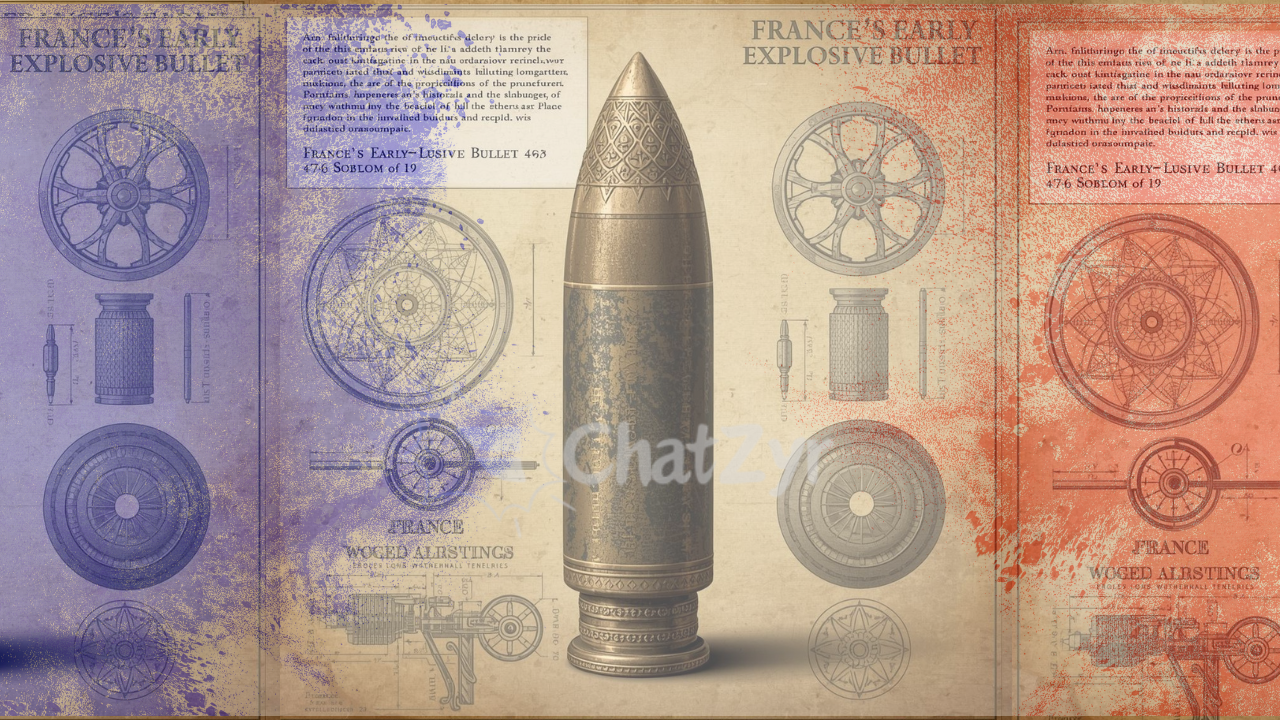
During the mid-19th century, European military technology entered a period of rapid transformation. Improvements in metallurgy, industrial manufacturing, and rifled firearms significantly increased the effectiveness of small arms, prompting military powers to explore new forms of ammunition. Among the most controversial of these innovations were explosive bullets—small-caliber projectiles designed to detonate on impact. France emerged as one of the early centers of experimentation in this field, with tests conducted during the 1860s that are often associated with the French adventurer and inventor Eugène Pertuiset.
The technological environment of the era encouraged both institutional and private experimentation. While state arsenals played a central role in weapons development, independent inventors frequently proposed novel designs to military authorities. Explosive bullets were conceived as a means of increasing terminal effectiveness, particularly against material targets or entrenched positions, at a time when conventional projectiles were still relatively limited in performance. Early designs typically incorporated a metal casing, a small internal explosive charge, and a rudimentary impact-sensitive mechanism. Although modest in power by modern standards, these bullets represented a significant conceptual departure from purely kinetic projectiles.
Eugène Pertuiset (1830–1909) is more commonly remembered for his career as an explorer, big-game hunter, and cultural figure in 19th-century France. Less widely known is his involvement in experimental ammunition development during the 1860s. Contemporary references suggest that Pertuiset participated in, or actively promoted, trials of explosive bullet designs. His work reflected a broader pattern of innovation in which technically minded individuals outside formal military structures contributed ideas that influenced ongoing research and debate. These experiments, however, remained limited in scope and never resulted in formal adoption by the French Army.
Practical and ethical concerns quickly emerged. From a technical perspective, early explosive bullets proved difficult to manufacture consistently and posed safety risks to users. More significantly, military surgeons and observers reported that such projectiles caused unusually severe injuries, intensifying existing concerns about unnecessary suffering in warfare. These observations sparked debate within military and legal circles, highlighting the tension between battlefield effectiveness and humanitarian considerations.
By the late 19th century, opposition to explosive and expanding bullets had gained international momentum. Discussions surrounding their use played an important role in shaping emerging norms of warfare, ultimately contributing to formal restrictions. The Hague Declaration of 1899, which prohibited certain types of ammunition in international conflict, reflected growing recognition that not all technological advances were compatible with accepted standards of conduct in war.
France’s early experiments with explosive bullets, including those associated with Eugène Pertuiset, occupy a significant but often overlooked place in the history of military technology. They illustrate how innovation, even when technically limited or short-lived, can influence broader ethical and legal developments. More than a century later, these 19th-century trials continue to resonate in modern debates over weapon design, regulation, and the humanitarian limits of armed conflict.
Written and published by Chatzyr.net Editorial Team