
Lung Cancer: Prevention, Early Detection, and Survival Outlook
By Editorial Desk | Chatzyr
In recent years, lung cancer has remained one of the leading causes of cancer-related deaths worldwide, largely due to late diagnosis. Public health guidelines stress that prevention and early screening can dramatically improve outcomes.
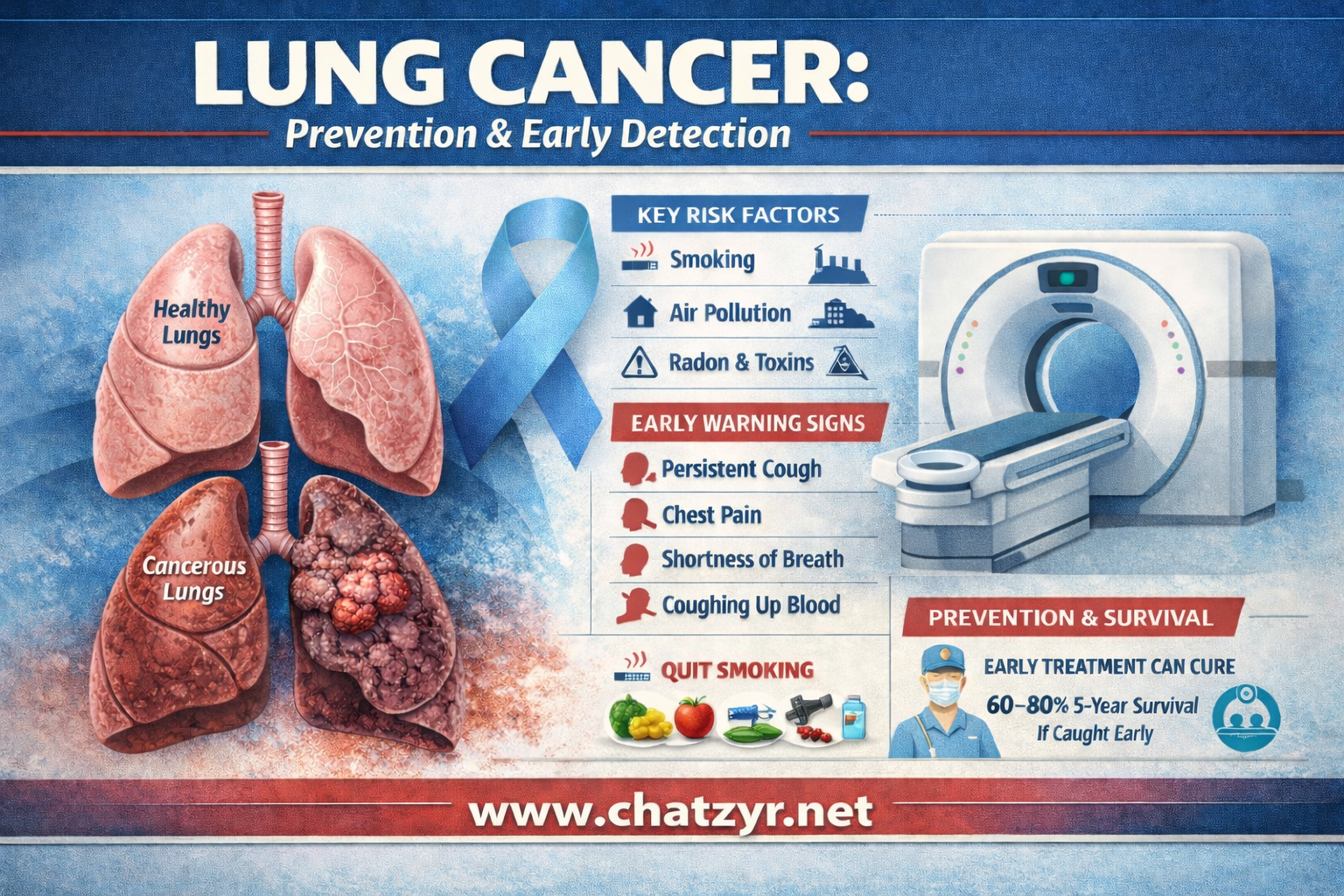
Medical evidence shows that 80–85 percent of lung cancer cases are linked to smoking, making it the most significant risk factor. However, non-smokers are also vulnerable. Air pollution, secondhand smoke, radon exposure, workplace chemicals, and genetic factors continue to contribute to rising cases globally.
Early symptoms are often subtle and frequently ignored. These include a persistent or worsening cough, chest pain, shortness of breath, fatigue, unexplained weight loss, repeated chest infections, or coughing up blood. Importantly, early-stage lung cancer may present no symptoms at all, increasing the risk of delayed diagnosis.
Current screening recommendations highlight low-dose CT (LDCT) scans as the most effective tool for early detection in high-risk individuals, particularly long-term smokers. Studies indicate that annual LDCT screening can reduce lung cancer deaths by 20–25 percent, while routine chest X-rays may fail to detect early disease.
Prevention remains the strongest defense. Quitting smoking, limiting exposure to polluted environments, maintaining physical activity, and following a balanced diet are proven risk-reduction strategies. Diets rich in fruits, leafy vegetables, broccoli, fish, nuts, and green tea support lung health and may help lower cancer risk, though they cannot replace medical screening.
Lung cancer is curable when detected early, most commonly through surgery, sometimes combined with chemotherapy or radiotherapy. Survival rates vary by stage: early-stage patients show a 60–80 percent five-year survival rate, while advanced-stage cases remain challenging despite advances in immunotherapy and targeted treatments.
Why it matters now: Increasing pollution levels and lifestyle risks continue to drive new cases, making early screening and prevention more urgent than ever.
Published on Chatzyr.net
Written By Editorial Desk | Team Chatzyr