
Migrants Return to Morocco After Brief Stay in Spain's Ceuta Enclave Amid Humanitarian Struggles | ChatZyr
By Editorial Desk | Team ChatZyr
CEUTA, SPAIN
Migrants who recently crossed into Spain's North African enclave of Ceuta began returning to Morocco on Saturday after spending several days with limited food, shelter and support, following one of the largest migration surges recorded at the territory's border.
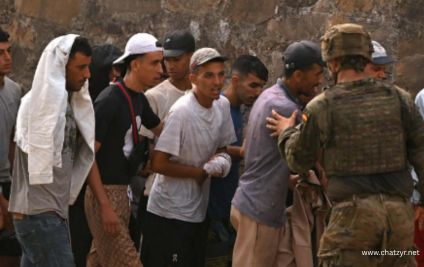
Spanish soldiers and Civil Guard officers directed a steady flow of migrants, most of them young men, toward the border crossing as they voluntarily left the enclave after wandering through the town for two or three days with little access to basic necessities.
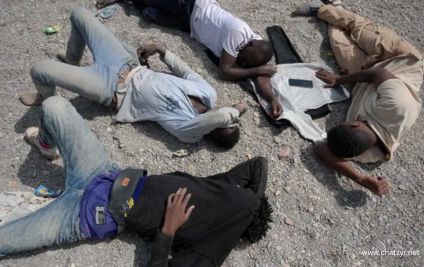
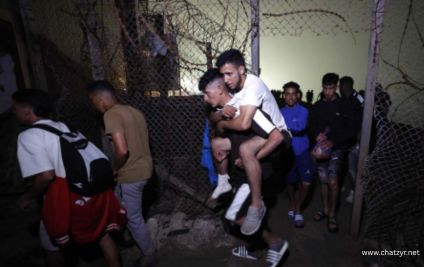
Many appeared physically exhausted, with some barefoot and others wrapped in Red Cross blankets after making the dangerous sea crossing.
"I'm leaving because there's no food. I thought I'd be welcomed, but that wasn't the case at all," 23-year-old Abdel Latif told AFP before returning to Morocco.
Latif, who survives through occasional work as a mechanic, said he made the journey hoping to find employment because of limited job opportunities in Morocco.
Unprecedented migration surge
Spanish authorities said between 50,000 and 60,000 migrants entered Ceuta over the course of two to three days, with many reaching the enclave by swimming around border barriers separating Morocco from the Spanish territory.
The unprecedented influx prompted a major humanitarian and security response from Spanish authorities while renewing debate over migration management at the European Union's external borders.
According to Spanish Interior Minister Fernando Grande-Marlaska, at least 67 people died while attempting the dangerous crossing.
The Spanish government said almost all of those who entered the enclave during the surge have since returned to Morocco.
Dangerous crossings continue
Despite tighter border controls, some migrants continued attempting the sea crossing on Saturday.
Emergency responders treated exhausted swimmers after they reached Spanish shores, while Spanish Civil Guard vessels intercepted others at sea and returned them toward Moroccan waters.
Spanish authorities also deployed floating barriers in the sea to help prevent further crossings into the enclave.
Ceuta's strategic importance
Ceuta, together with Melilla, represents the European Union's only land borders with Africa and has long been a key entry point for migrants attempting to reach Europe.
Its strategic location on the northern coast of Morocco has made it a focal point for migration and border security challenges for decades.
Search for better opportunities
Many migrants said economic hardship motivated them to undertake the risky journey.
Soufiane, a 42-year-old Moroccan security guard, said he crossed by swimming after struggling to survive on low wages.
"People want to come because there is no future in Morocco," he told AFP, rejecting suggestions that the influx amounted to an organised invasion.
He said he earned the equivalent of about 10 euros for a 12-hour workday, making it difficult to support himself.
Daily life gradually resumes
As migrant numbers declined, businesses across Ceuta gradually reopened, traffic resumed and daily life slowly returned.
Interior Minister Grande-Marlaska said the situation had "virtually" returned to normal.
Some residents welcomed the increased police presence, while others said they remained concerned after witnessing the sudden arrival of tens of thousands of migrants over a matter of days.
Why it matters
The events in Ceuta highlight the continuing humanitarian and political challenges facing Europe at its external borders. While many migrants have now returned to Morocco, the crisis underscores the economic pressures driving irregular migration and the risks thousands continue to take in search of employment and better opportunities across the Mediterranean.
Published on ChatZyr.net
Written By Editorial Desk | Team ChatZyr
Disclaimer: This report is based on official statements, eyewitness accounts and publicly available information available at the time of publication. Migration figures and casualty numbers may be updated as authorities continue their assessments.