Nepal Disaster Raises Troubling Questions as Police Probe Alleged Theft From Dead
By Editorial Desk | Team ChatZyr
As rescuers continue searching for victims of the devastating floods in Nepal, a disturbing incident involving the alleged theft of jewellery from a dead body has raised questions about how victims are treated during times of catastrophe.
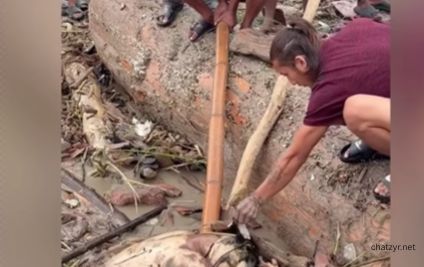
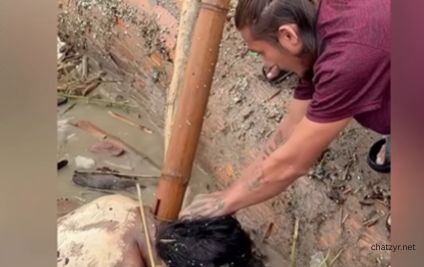
Nepalese police arrested two men after a video circulated on social media allegedly showing people removing earrings from the body of a flood victim in Rasuwa.
The incident has added another grim dimension to a disaster that has already left hundreds dead and more than 1,300 people missing or unaccounted for across the affected areas.
Search for survivors turns into recovery operation
Rescue teams, soldiers, police officers and local volunteers have been working through mud and debris to locate survivors and recover those who did not make it out.
The scale of the destruction has left many communities struggling to locate missing relatives, while emergency workers continue operating in difficult terrain.
For families, the recovery of a body is only part of the ordeal. They must also identify their loved ones and recover whatever personal belongings can still be found.
That makes reports of valuables being taken from victims particularly disturbing.
Police investigate alleged jewellery theft
According to Nepalese police reporting, two men were arrested in connection with allegations that earrings were removed from flood victims.
The investigation followed the circulation of footage on social media. Authorities are now responsible for establishing exactly what happened and determining whether the suspects committed the alleged offences.
The case also highlights the difficulties authorities face in protecting victims and their belongings while large-scale recovery operations are taking place.
Not every search through the debris is criminal
Images emerging from the disaster zone show residents searching through thick mud and piles of debris.
But searching through wreckage should not automatically be interpreted as looting.
Many survivors have lost virtually everything and are digging through the remains of their homes to recover clothing, documents, medicines, food and other possessions.
A person searching for belongings in the rubble may simply be trying to recover what remains of their own life.
That is fundamentally different from taking property from a deceased victim.
The distinction is particularly important when photographs or videos are circulated without sufficient context.
The human cost behind every recovered body
For rescuers, a recovered body is part of an enormous search operation.
For a family, it is something much more personal.
It may finally answer days of uncertainty.
It may allow relatives to begin mourning.
And the belongings recovered alongside a victim can carry enormous emotional value.
A ring, necklace, watch or pair of earrings may have little significance to a stranger, but could be deeply important to the victim's family.
In the aftermath of a disaster, those possessions should be protected and returned whenever possible.
A test of disaster response — and humanity
The Nepal floods have produced countless examples of people helping one another.
Rescue workers have entered dangerous areas.
Security personnel have searched through destroyed communities.
Medical teams have treated survivors.
Local residents have helped strangers navigate the aftermath.
But disasters can also create opportunities for exploitation, particularly when communities are overwhelmed and normal systems are under immense pressure.
That is why protecting victims must remain part of the response.
The dead cannot protect themselves. Their dignity depends on the people who recover them.
What happens next
The police investigation into the alleged jewellery theft will determine what happened and whether those arrested should face further legal action.
Meanwhile, rescue teams continue searching for missing people and recovering victims from areas devastated by the floods.
For families waiting for news, the priority is simple: find their loved ones, identify them and bring them home with dignity.
The disaster has already taken lives and destroyed communities.
The recovery effort now carries another responsibility — ensuring that those who died are treated with the same dignity and respect owed to every human being.
Disclaimer: This report is based on publicly reported information. Allegations against arrested individuals have not been treated as established guilt and remain subject to the legal process. Images circulating from the disaster zone should not be interpreted as evidence of criminal conduct without independent verification.
Written By Editorial Desk | Team ChatZyr