
Pakistan’s Bigfoot: The Barmanou Mystery of Chitral’s Hidden Mountains | ChatZyr
By Editorial Desk | Team ChatZyr
High in the remote mountains of northern Pakistan, where the Hindu Kush rises above isolated valleys and ancient communities have lived for centuries, a strange legend refuses to disappear.
People have claimed to see it.
Shepherds have spoken about it.
Villagers have passed stories from one generation to another.
And a European zoologist spent years travelling through some of Pakistan's most difficult terrain trying to determine whether there was something real behind the stories.
The creature is commonly known internationally as the Barmanou or Barmanu.
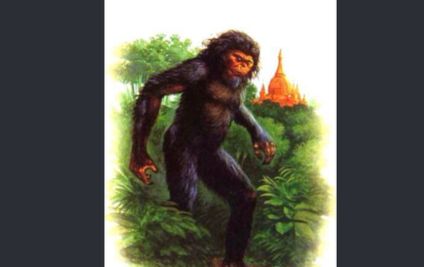
It is often described as Pakistan's equivalent of Bigfoot — a large, hairy, human-like being allegedly living in the remote mountains and forests of the Hindu Kush.
But this is where the mystery becomes important.
The legend is real. The stories are real. The investigations happened.
The creature itself remains unproven.
No scientifically verified specimen has ever been found.
No DNA has confirmed an unknown human-like species.
No physical evidence has established that a Barmanou population exists anywhere in Pakistan.
Yet the mystery continues to fascinate researchers and storytellers.
Because somewhere between folklore, eyewitness testimony and scientific uncertainty, Pakistan has one of its most extraordinary unexplained legends.
A wild man in the mountains
The Barmanou is most closely associated with the remote mountain regions of Chitral, particularly areas near the Hindu Kush and the Pakistan-Afghanistan frontier.
However, the terminology surrounding the creature is more complicated than modern internet stories often suggest.
Different communities have historically used different names and traditions for mysterious wild human-like beings.
Research associated with the late zoologist Jordi Magraner recorded variations in local traditions and terminology, including names associated with “wild men” reported by people in different parts of Chitral.
Today, Barmanou or Barmanu has become the name most commonly used internationally.
But there was never a single universally accepted scientific description of the creature.
That is because the Barmanou did not enter history through a museum specimen or a scientific discovery.
It entered through stories.
Stories told in mountain communities.
Stories carried through oral traditions.
Stories about something that was said to live beyond the villages, deep inside forests and remote valleys.
What did witnesses claim to see?
There is no scientifically accepted photograph showing a Barmanou.
Everything associated with its appearance comes primarily from reported eyewitness accounts and folklore.
Descriptions collected by investigators often included a being that was allegedly:
- Human-like in appearance
- Covered in substantial body hair
- Able to walk upright
- Large and physically powerful
- Possessing human-like hands and feet
- Associated with unusual cries or vocalisations
- Living far from permanent settlements
Some witnesses reportedly described something that appeared neither entirely human nor clearly identifiable as a known animal.
That is why the creature became associated with the idea of a “wild man.”
But an important rule applies here:
A detailed description is not the same as scientific evidence.
Witnesses can sincerely believe they saw something extraordinary while still being mistaken about what they saw.
Distance, darkness, fear, weather and memory can all affect human perception.
The Barmanou mystery therefore begins with an intriguing collection of reports — not with proof.
Jordi Magraner: The man who searched for the Barmanou
The modern history of the Barmanou is closely connected to Jordi Magraner, a Franco-Spanish zoologist who became interested in reports of wild human-like creatures in Central and South Asia.
Beginning in the late 1980s, Magraner travelled repeatedly to northern Pakistan.
His focus was particularly on Chitral, where he interviewed local people who claimed to have seen or encountered mysterious human-like beings.
Magraner's work was unusual because he attempted to document testimonies in a structured way.
Rather than simply asking whether people believed in a mythical creature, he collected descriptions and attempted to compare what witnesses said they had experienced.
According to published accounts of his field research, Magraner documented 27 reports describing 31 alleged incidents, including claimed encounters and observations of tracks.
The accounts involved testimonies collected from people during his investigations.
But this distinction is essential:
These were reported testimonies — not scientifically confirmed sightings.
Magraner's work was part of cryptozoological research, a field focused on investigating animals whose existence has been claimed but not scientifically confirmed.
Cryptozoology is not generally recognised as mainstream zoological science.
That does not automatically make every witness dishonest or every investigation meaningless.
It simply means that the evidence did not reach the standard required to establish the discovery of a new species.
And despite years of investigation, Magraner never produced the one thing science needed most:
Physical proof.
The mysterious cries of the Hindu Kush
Some of the most intriguing reports associated with the investigation involved sound rather than sightings.
Magraner's team reportedly heard unusual cries and vocalisations during fieldwork in the mountains.
The sounds were described as strange and difficult to identify.
But no scientifically verifiable recording established their source.
And that matters.
Mountain environments can make sound extremely difficult to interpret.
Wind can carry a cry across enormous distances.
Echoes can make one sound appear to come from several directions.
Known animals can produce noises that sound unfamiliar when heard under unusual conditions.
Without an identified source or scientifically analysable recording, the sounds cannot be treated as evidence of an unknown creature.
They remain what they were:
Unidentified sounds reported in the mountains.
And that is one of the reasons the mystery survived.
The extraordinary theory: Could it have been an ancient human?
Perhaps the most dramatic theory connected with the Barmanou is the idea that it could represent a surviving ancient human relative.
Some cryptozoological researchers compared alleged descriptions of the creature with prehistoric humans and proposed connections to extinct hominids.
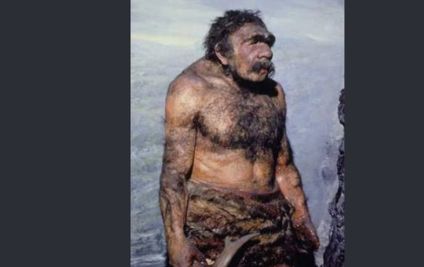
The most famous suggestion involved Neanderthals.
Imagine the possibility.
An ancient branch of humanity surviving unnoticed in remote mountains.
A population living beyond modern civilisation.
It would be one of the greatest scientific discoveries in human history.
But there is a major problem.
There is no scientific evidence that Neanderthals survived into modern times.
Neanderthals disappeared as a distinct human population tens of thousands of years ago.
Modern humans carry traces of Neanderthal DNA because ancient populations interbred with them.
But that does not mean Neanderthals are still alive.
No verified DNA.
No modern skeleton.
No biological population.
No scientific evidence connects the Barmanou to a surviving ancient human species.
The Neanderthal theory remains speculation.
It is fascinating.
But it is not established science.
Could people have mistaken known animals for the Barmanou?
Yes.
And this is one of the most important possible explanations.
Northern Pakistan contains some of the world's most remarkable mountain wildlife.
Animals living in the region include bears, wolves, snow leopards and other species that can be difficult to identify during brief or distant encounters.
A bear seen standing on its hind legs, particularly in poor light, could potentially appear human-like from a distance.
Shadows can distort body shapes.
Thick fur can make an animal appear larger.
Fear can affect memory.
And a sighting that lasts only seconds may later become difficult to reconstruct accurately.
However, it would be inaccurate to say that all Barmanou reports were definitely bears.
There is no scientific investigation proving that.
The honest conclusion is simpler:
Misidentification of known wildlife is one plausible explanation for some alleged sightings.
Other reports may have different explanations.
And some may simply remain impossible to evaluate because there is insufficient evidence.
Why hasn't anyone found physical evidence?
This is the biggest scientific problem facing the Barmanou mystery.
If a large, human-like creature existed as a biological species, it would require a breeding population to survive.
That population should leave evidence.
Scientists would expect the possibility of finding:
🧬 DNA
🦴 Bones
🦷 Teeth
🐾 Consistent tracks
📷 Clear camera-trap images
💩 Biological samples
🧪 Hair that cannot be identified as belonging to known animals
So far, no evidence has scientifically confirmed the existence of the Barmanou.
This does not prove that every witness invented their story.
It means that no extraordinary biological claim has yet been supported by extraordinary evidence.
And that is where science draws the line.
Pakistan is not alone in its wild-man legends
The Barmanou is part of a remarkable global tradition.
Different cultures have stories about mysterious, hairy, human-like beings living in forests and mountains.
🇺🇸 North America — Bigfoot or Sasquatch
🏔️ The Himalayas — The Yeti
🌍 Central Asia — Almas or Almasty
🇨🇳 China — Yeren
🇦🇺 Australia — Yowie
🇵🇰 Northern Pakistan — Barmanou
The similarities are fascinating.
But they should not be treated as evidence that one mysterious species exists around the world.
These creatures belong to different cultures, histories and traditions.
The similarities may reflect something deeply human.
For thousands of years, people have imagined creatures living between civilisation and wilderness.
The village represented safety.
The forest represented danger.
The mountains represented the unknown.
And somewhere beyond those boundaries lived a figure that looked almost human — but was not entirely human.
The wild man.
Why do these legends survive?
Perhaps the answer lies in the mountains themselves.
The Hindu Kush is one of the world's most dramatic landscapes.
Deep valleys can remain isolated.
Weather can change suddenly.
Forests can hide animals from view.
Sounds can travel across mountains in strange ways.
For communities living in these environments, nature has always contained things that cannot immediately be explained.
Before modern cameras, satellite maps and scientific surveys, stories helped people understand the unknown.
That does not mean the stories are meaningless.
Folklore can preserve:
- Cultural memory
- Traditional fears
- Historical experiences
- Encounters with wildlife
- Community identity
The Barmanou may therefore be important even if the creature is never proven to exist.
The legend itself is part of Pakistan's cultural heritage.
The tragic end of the Barmanou investigator
Jordi Magraner's connection with the region ended tragically.
In 2002, Magraner was murdered at his home in the Chitral region.
Contemporary reports said he and a young household employee were killed, and police arrested suspects during the investigation.
The exact circumstances surrounding the case became the subject of differing accounts.
His death ended the work of the man most closely associated with the modern search for Pakistan's legendary wild man.
But it did not end the story.
His interviews and field investigations continued to be discussed by cryptozoologists and researchers interested in wild-human traditions across Central and South Asia.
Magraner never proved the existence of the Barmanou.
But he helped document a collection of stories that might otherwise have remained largely unknown outside the communities where they were told.
Could modern technology finally solve the mystery?
Today, scientists have tools that Magraner did not have when he began his research.
Modern investigations could potentially use:
📷 Camera traps
Remote cameras could monitor wildlife in difficult-to-reach areas for months.
🧬 Environmental DNA
Scientists can now detect traces of animals from DNA left behind in water, soil and other environments.
🛰️ Advanced mapping
Modern satellite technology can help researchers understand remote habitats and animal movement.
🧪 Genetic analysis
Any unusual biological sample could be compared against known species.
If the Barmanou exists as a real biological creature, modern technology would offer a much stronger chance of finding evidence than eyewitness stories alone.
But until such evidence appears, there is only one scientifically responsible conclusion:
The Barmanou remains unconfirmed.
The real mystery is not whether people are lying
One of the biggest mistakes people make when discussing legends like the Barmanou is assuming there are only two possibilities.
Either:
The creature exists.
Or:
Every witness is lying.
Reality is much more complicated.
A person can be completely honest and still misidentify what they saw.
Someone can hear a real sound but misunderstand its source.
A story can begin with a genuine experience and change as it passes through generations.
Folklore can preserve real cultural memories without being a literal record of biological events.
The witnesses may be sincere.
The stories may be ancient.
The experiences may have felt completely real.
And still, science may be unable to confirm the creature.
That is what makes the Barmanou mystery genuinely fascinating.
Pakistan's Bigfoot: A legend science has not solved
The Barmanou occupies an unusual place.
It is not simply a monster story invented for the internet.
Its history is connected to real mountain communities, oral traditions and documented field interviews.
A real zoologist spent years investigating reports.
Real people gave testimonies.
Real expeditions entered remote valleys.
And yet, after decades of interest, there is still no scientific proof that the creature exists.
That is the truth at the centre of the mystery.
The legend is real.
The witnesses are real.
The investigation happened.
The creature remains unproven.
Perhaps the Barmanou is the result of folklore, misidentified wildlife and generations of storytelling.
Perhaps some encounters have explanations nobody has yet discovered.
Or perhaps the legend survives simply because humans have always been fascinated by what might exist beyond the edge of the known world.
High in Pakistan's mountains, where forests disappear into valleys and the Hindu Kush stretches towards the sky, the answer remains hidden.
For now.
Pakistan's Bigfoot Has a Name — But Science Is Still Waiting for Proof
The Barmanou remains one of Pakistan's most fascinating mysteries.
Not because science has proven a creature exists.
But because the story sits precisely where the most powerful mysteries always live:
Between what people say they saw — and what humanity can actually prove.
Why It Matters
The Barmanou is more than a story about a possible unknown creature. It represents part of the oral traditions of northern Pakistan and demonstrates how folklore, eyewitness testimony and scientific investigation can overlap without becoming the same thing. The legend deserves to be documented and preserved, while extraordinary claims must remain clearly separated from verified scientific evidence.
Disclaimer
The Barmanou is an unconfirmed cryptid. This article presents documented folklore, reported eyewitness accounts and the history of investigations while distinguishing those claims from established scientific evidence. No scientific institution has confirmed the existence of the Barmanou as an undiscovered species.
Credits
Historical research associated with Jordi Magraner's field investigations | Contemporary reporting from Chitral and Pakistan | Published cryptozoological research and historical accounts
Published on Chatzyr.net
Written By Editorial Desk | Team ChatZyr