Rubio Meets China's Wang Yi as Trump-Xi Summit Plans, South China Sea and Iran Tensions Take Centre Stage | ChatZyr
By Editorial Desk | Team ChatZyr
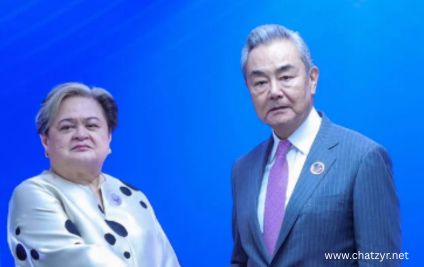
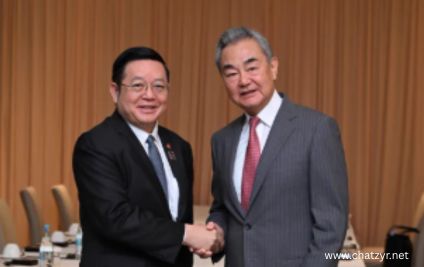
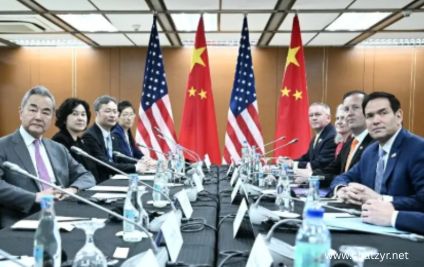
MANILA: US Secretary of State Marco Rubio and Chinese Foreign Minister Wang Yi held high-level talks on Wednesday on the sidelines of the Association of Southeast Asian Nations (Asean) Foreign Ministers' Meeting in Manila, as mounting tensions in the Middle East and the South China Sea placed regional security at the centre of global diplomacy.
The meeting is widely viewed as laying the groundwork for a possible summit between US President Donald Trump and Chinese President Xi Jinping, which Trump has indicated could take place toward the end of September. It also comes amid a fragile truce between the world's two largest economies, with relations strained by trade disputes, technology restrictions, security concerns and recent US accusations of Chinese interference in American elections, claims Beijing has denied.
Asean foreign ministers voiced serious concern over renewed conflict in the Middle East and rising tensions in the South China Sea, urging dialogue and restraint to preserve regional stability.
Following discussions with Asean counterparts, Rubio blamed Iran for the current deadlock in negotiations, saying Washington remained ready for diplomacy but would act to protect its interests and those of its allies if talks failed.
"If they're serious, we're serious. If they're not, then we will do what's necessary to protect our interests," Rubio said.
He also warned that Iran must not be allowed to control the Strait of Hormuz, one of the world's most critical maritime chokepoints through which a significant share of global oil shipments passes, saying such a development could threaten international trade and set a dangerous precedent for other strategic waterways, including those in Southeast Asia.
South China Sea Dispute Remains a Major Flashpoint
Ahead of the summit, Rubio published an opinion article warning that Asean countries faced growing coercive pressure in the South China Sea, arguing that no nation should be allowed to use trade routes as a geopolitical weapon.
The South China Sea carries more than one-third of global maritime trade and remains one of the world's most strategically important waterways. China claims sovereignty over nearly the entire sea despite overlapping claims by Brunei, Indonesia, Malaysia, the Philippines and Vietnam, making it one of Asia's most contested regions.
Tensions escalated again this week after another confrontation between Chinese coast guard vessels and Philippine naval personnel, prompting both Beijing and Manila to summon each other's ambassadors.
Australian Foreign Minister Penny Wong described China's recent actions as "destabilising and risky," while China's Foreign Ministry rejected the criticism, saying countries not directly involved in the dispute should avoid interfering or escalating tensions.
Wang Calls for Regional Unity
Addressing Asean foreign ministers, Wang Yi urged member states to strengthen mutual trust, openness and cooperation, describing China and Asean as an "anchor for regional and global peace and development."
He also accused elements within the Philippine security establishment of carrying out deliberate provocations that benefited "external forces," while reaffirming Beijing's willingness to work with Asean to reduce tensions and maintain regional stability.
Quad Reaffirms Indo-Pacific Commitment
Rubio also met with his counterparts from India, Australia and Japan during a meeting of the Quad, where the four nations reaffirmed their commitment to a free, open and rules-based Indo-Pacific while expressing continued support for Asean's central role in regional security and cooperation.
China has repeatedly criticised the Quad, describing it as a Cold War-style grouping aimed at containing Beijing's rise.
The Manila gathering is also being attended by representatives from Britain, Canada, the European Union, India, Japan, Russia and South Korea, underscoring its growing importance as one of the region's premier diplomatic forums.
With conflicts in the Middle East, maritime disputes in the Indo-Pacific and preparations for a possible Trump-Xi summit unfolding simultaneously, the Manila meetings are being viewed as one of the year's most consequential diplomatic gatherings, with outcomes that could shape global security, trade and US-China relations in the months ahead.
Published on ChatZyr.net
Written By Editorial Desk | Team ChatZyr
Disclaimer: This report is based on information obtained from credible and publicly available sources at the time of publication. Details may evolve as further official statements and diplomatic developments emerge.