
international
US Vaccine Panel Revises Hepatitis B Guidelines in Major Policy Shift Under Trump-Era Review
10mo ago • Dec 6, 2025, 06:59 AM • Updated 2mo ago
4 min read
US Vaccine Panel Reverses Hepatitis B Birth Vaccine Policy in Major Trump-Era Health Shift
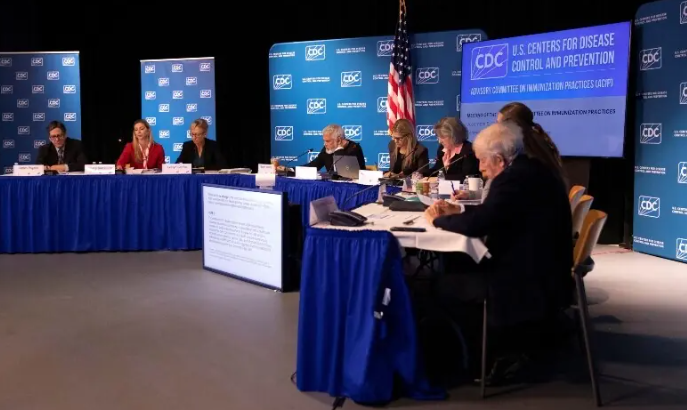
A US vaccine advisory panel, appointed by President Donald Trump’s health secretary Robert F. Kennedy Jr., has voted to end the long-standing recommendation that all newborns in the United States receive the hepatitis B vaccine at birth.
The decision marks a major reversal in US vaccine policy, sparking widespread criticism from medical experts and health organizations. The panel’s move is part of a broader Trump-era overhaul of vaccine guidelines, following Kennedy’s appointment earlier this year.
For decades, US health authorities advised that all infants — not just those born to mothers with hepatitis B — receive the first of three vaccine doses immediately after birth. This universal approach helped virtually eliminate hepatitis B infections among American children and young adults.
Under the new policy, the panel recommends “individual-based decision-making”, allowing parents and healthcare providers to decide whether to vaccinate newborns if the mother tests negative for hepatitis B. The decision should weigh vaccine benefits, risks, and infection exposure, according to the panel.
Former President Donald Trump praised the move on Truth Social, calling it “a very good decision.” However, the American Academy of Pediatrics and other medical groups condemned the change, warning it could increase hepatitis B infections among infants due to gaps in maternal screening and potential exposure from others.
“This irresponsible and purposely misleading guidance will lead to more hepatitis B infections in infants and children,” said AAP President Susan J. Kressly.
The vote passed 8–3, and CDC officials are expected to formally adopt the new recommendations soon. The panel also advised that unvaccinated babies wait at least two months before receiving their first dose and undergo antibody testing before the second dose.
Since taking office, Health Secretary Robert F. Kennedy Jr. has replaced all members of the Advisory Committee on Immunization Practices (ACIP) with figures known for vaccine-sceptic views. The revamped panel has already revised guidance on COVID-19 and measles vaccines, raising concerns about declining vaccination rates nationwide.
The ACIP also began reviewing the entire childhood vaccination schedule, drawing further controversy after allowing testimony from Aaron Siri, a lawyer known for promoting anti-vaccine theories.
While Trump continues to back Kennedy’s policies, some Republicans, including Senator Bill Cassidy, have voiced strong opposition. Cassidy, a physician, urged the CDC to reject the new guidance and maintain the evidence-based vaccination policy that has protected millions of children since 1991.
The United States has recommended universal hepatitis B vaccination at birth for over three decades — a policy also endorsed by the World Health Organization, China, and Australia. Despite the reversal, health experts warn that the change could undermine decades of progress in preventing the spread of the potentially deadly liver disease.
ACIP Vaccine Policy Faces Backlash as States Reject New Guidelines and Experts Warn of Risks
The Advisory Committee on Immunization Practices (ACIP) is facing growing backlash after its controversial vaccine policy changes, which could have major financial and public health repercussions across the United States.
Because federal vaccine guidelines often determine whether health insurance companies cover the cost of vaccines — which can run into hundreds of dollars per dose — the ACIP’s recommendations play a crucial role in national healthcare policy.
However, the committee’s influence is rapidly declining amid intense criticism from the US scientific and medical community. Several Democratic-led states have announced they will no longer follow ACIP’s recommendations, citing concerns over public safety and scientific integrity.
Before the vote, Cody Meissner, one of the few dissenting members of the advisory panel, urged his colleagues to maintain the existing vaccine guidance.
“Do no harm is a moral imperative. We are doing harm by changing this wording,” Meissner warned, emphasizing the potential dangers of altering long-standing, evidence-based vaccine policies.
The growing divide highlights a deepening national debate over vaccine policy, insurance coverage, and the future of public health decision-making in the United States.