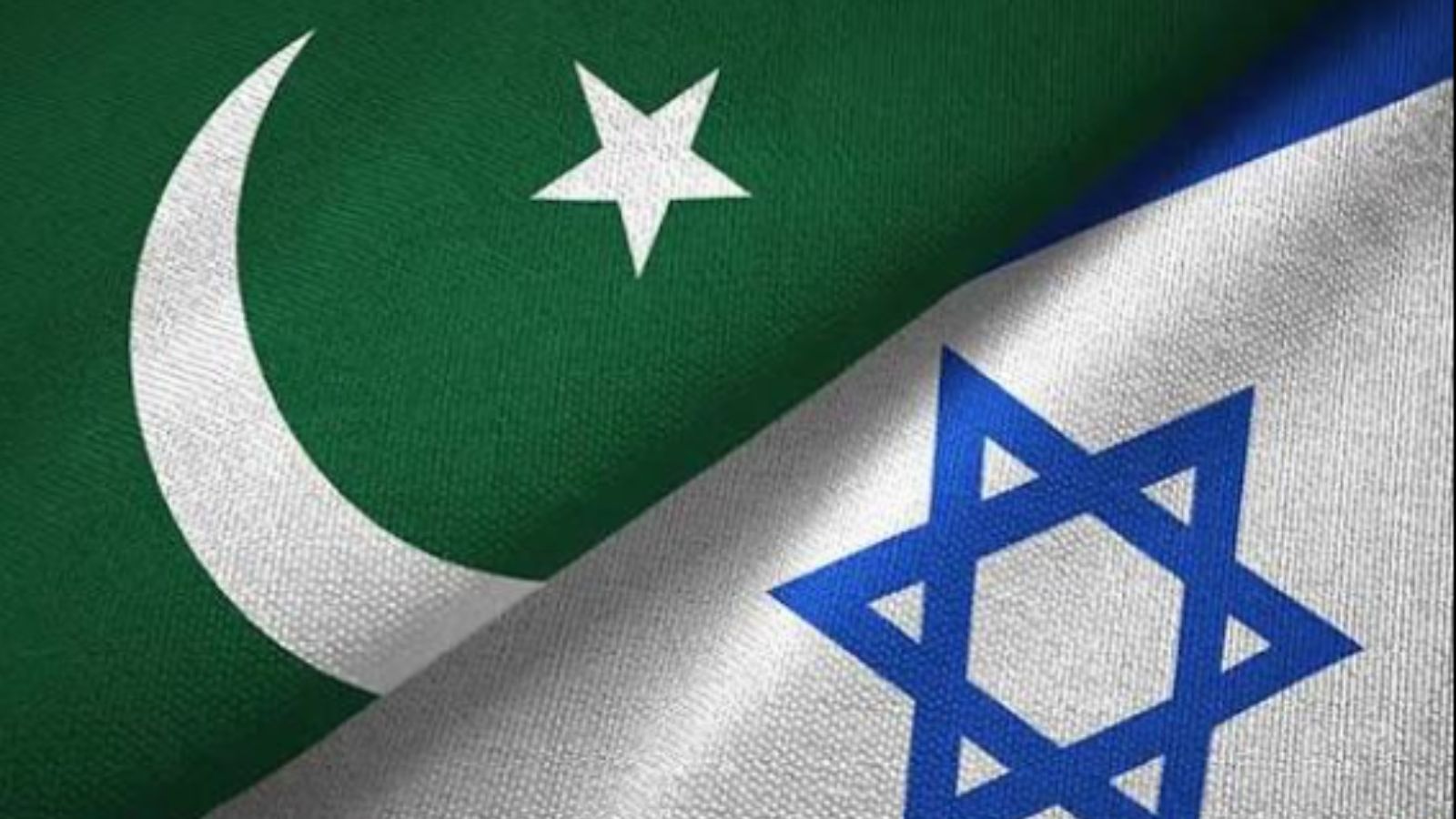
Why Pakistan Still Says 'No' to Israel: The Story Behind One of the World's Most Unusual Diplomatic Relationships
By Editorial Desk | Team Chatzyr
Every time tensions rise in the Middle East, one question quietly returns across Pakistan and beyond:
If Israel has diplomatic relations with dozens of countries, why not Pakistan?
It is a question that sparks debate on social media, television talk shows, and university campuses. Some believe the two countries are enemies. Others assume they have fought wars against each other.
The reality is very different.
Pakistan and Israel have never fought a war. They do not share a border, have no territorial disputes, and have never faced each other on a battlefield. Yet, more than 75 years after Israel's establishment in 1948, the two countries still have no formal diplomatic relations.
So, what is really preventing them from becoming diplomatic partners?
A Policy That Has Remained Unchanged
When Israel declared independence in 1948, many countries quickly recognized the new state. Pakistan chose a different path.
Since then, successive Pakistani governments have maintained a broadly consistent position: Pakistan will consider recognizing Israel only after meaningful progress toward a negotiated settlement of the Israeli-Palestinian conflict that includes the establishment of an independent Palestinian state.
Despite changes in governments, political parties, and military administrations, that policy has remained largely unchanged for decades.
Does Israel Want Relations with Pakistan?
The answer is yes.
Over the years, Israeli leaders and officials have publicly indicated that they would welcome diplomatic relations with Pakistan.
From Israel's perspective, Pakistan is one of the world's largest Muslim-majority countries, a nuclear-armed state, and an influential voice in the Islamic world. Establishing ties with Islamabad would represent an important diplomatic milestone.
However, diplomatic relations require agreement from both sides.
Why Pakistan Has Not Changed Its Position
Pakistan's stance is closely linked to its support for the Palestinian cause.
Islamabad has consistently supported a negotiated two-state solution and has argued that recognition of Israel should follow meaningful progress toward Palestinian statehood.
For Pakistani policymakers, the issue is viewed not simply as a bilateral relationship with Israel but as part of a broader position on the Israeli-Palestinian conflict and international diplomacy.
Why the Middle East Matters to Pakistan
Although Pakistan is located in South Asia, developments in the Middle East have direct consequences for the country.
Pakistan shares a border with Iran, maintains long-standing defence cooperation with Saudi Arabia, and has close political and economic ties with Gulf nations where millions of Pakistanis live and work.
Regional instability can affect energy prices, trade, remittances, and economic growth, making peace in the Middle East an important national interest for Islamabad.
This balancing act has become an important feature of Pakistan's foreign policy.
Could Relations Change in the Future?
International diplomacy is constantly evolving.
The Abraham Accords demonstrated that countries without previous diplomatic relations with Israel can choose a different path when political circumstances change.
Whether Pakistan eventually does the same remains uncertain.
Any future decision would depend on the country's elected leadership, its foreign policy priorities, developments in the Israeli-Palestinian conflict, and the broader regional environment.
The Bigger Picture
The relationship between Pakistan and Israel is often misunderstood.
It is not the story of two countries at war.
It is the story of diplomacy, foreign policy, historical commitments, and differing approaches to one of the world's longest-running conflicts.
Israel has generally expressed its willingness to establish diplomatic relations with Pakistan.
Pakistan, meanwhile, has maintained that recognition remains linked to progress on the Palestinian issue.
For now, the absence of diplomatic relations is not the result of military hostility but of a long-standing foreign policy decision that continues to shape Pakistan's approach to one of the world's most sensitive geopolitical issues.
Published on Chatzyr.net
Written By Editorial Desk | Team Chatzyr
Disclaimer: This analysis is based on publicly available historical records, official policy statements, and internationally documented diplomatic developments. It is intended to provide factual context and does not endorse the views or policies of any government, organisation, or political group.