
Iceland Is the World’s Most Peaceful Country in 2026. What Makes It So Safe? | ChatZyr
By Editorial Desk | Team ChatZyr
While wars continue to affect countries across several regions, one nation has once again emerged at the top of the world's major peace ranking.
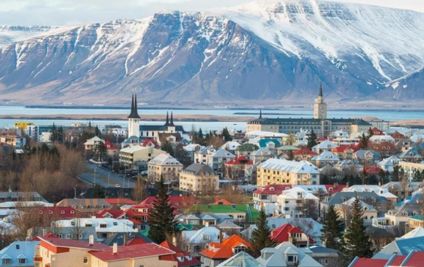
Iceland has been named the world's most peaceful country in the 2026 Global Peace Index (GPI), extending its record to 19 consecutive years at the top. The country recorded a score of 1.161, placing it ahead of New Zealand, Switzerland, Slovenia and Ireland.
The result is particularly notable because it comes during a period of worsening global security. The 2026 GPI reports that worldwide peacefulness deteriorated for the 12th consecutive year, with 99 of the 163 countries assessed becoming less peaceful over the previous year.
So what makes Iceland different?
Iceland's Peace Is About More Than Crime
The term “most peaceful” can sometimes be confused with “safest,” but the Global Peace Index measures something broader.
The index evaluates countries using 23 qualitative and quantitative indicators across three major areas: Societal Safety and Security, Ongoing Domestic and International Conflict, and Militarisation.
That means Iceland's first-place ranking is not based simply on whether someone is likely to experience crime on the street. It reflects the country's wider level of internal stability, involvement in conflicts and military activity.
Iceland performs strongly across these areas, helping it maintain a position that it has held since the beginning of the index's modern rankings.
A Country Without a Standing Military
One of Iceland's most distinctive characteristics is its defence structure.
Unlike most countries, Iceland does not maintain a conventional standing military. Instead, its security arrangements rely on institutions such as the Icelandic Coast Guard and international cooperation, including its membership in NATO.
The absence of a standing military contributes to Iceland's low level of militarisation, one of the factors considered by the Global Peace Index.
But military spending alone does not explain Iceland's position. The Institute for Economics & Peace also points to very low crime levels and strong social cohesion as important factors supporting the country's long-term peacefulness.
The Countries Closest to Iceland
Iceland is not alone at the top of the 2026 ranking.
New Zealand occupies second place, followed by Switzerland, Slovenia and Ireland. Austria, Portugal, Singapore, Finland and Japan complete the top 10.
The rankings also highlight the continued strength of Europe in global peace measurements. Seven of the world's 10 most peaceful countries are located in Western and Central Europe, although the region itself experienced a deterioration in peacefulness over the past year.
Japan is the only East Asian country in the 2026 top 10, while New Zealand is the highest-ranked country in the Asia-Pacific region.
The World Around Iceland Is Becoming Less Peaceful
Iceland's position becomes more striking when placed against the broader global picture.
The 2026 Global Peace Index says that 99 countries deteriorated in peacefulness during the past year, the largest number recorded in the index's 20-year history. Overall global peacefulness has now declined for 12 consecutive years.
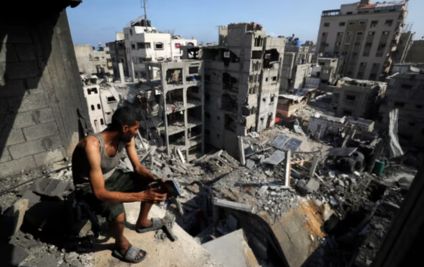
The report also records 61 active state-based conflicts, the highest number since the end of the Second World War, while more than 181,000 people were killed in conflict during 2025.
The economic consequences are also significant. The Institute for Economics & Peace estimates that violence cost the global economy approximately $21.81 trillion in 2025, equivalent to 10.5% of global GDP.
Against that background, Iceland's continued stability stands out.
Does This Mean Iceland Is the Safest Country for Everyone?
Not necessarily.
Someone asking for the “safest country” might be thinking about violent crime, while another person could be considering war risk, political stability, healthcare, road safety, natural disasters, employment or immigration.
The Global Peace Index does not measure all of these factors.
Its ranking is specifically a measurement of peacefulness, which is why the most accurate description is that Iceland is the world's most peaceful country according to the 2026 Global Peace Index.
That distinction matters because a peace ranking should not be presented as a guarantee that a country is free from every possible danger.
Why Iceland Keeps Coming First
Iceland's 19-year run at the top is not the result of one temporary improvement.
Its position reflects a long-term combination of low levels of conflict, strong societal security and limited militarisation. The Institute for Economics & Peace says Iceland's peacefulness improved by 2% in the latest edition, while the country remained at number one overall.
Its success is therefore less about having a single “secret” to safety and more about the cumulative effect of a stable society, limited involvement in armed conflict and relatively low militarisation.
A Small Country With a Remarkable Record
Iceland is a relatively small country, but its position in the Global Peace Index has remained remarkably consistent.
For 19 consecutive years, it has occupied the number-one position, even as the international environment around it has changed dramatically.
The 2026 ranking therefore tells two stories at the same time: Iceland's continued stability and the wider deterioration in global peace.
For anyone searching for the world's safest or most peaceful country, the wording matters. There is no single ranking that can measure every form of personal risk.
But under the methodology of the 2026 Global Peace Index, Iceland is once again number one.
Why It Matters
Iceland's position is significant not simply because it tops a list, but because it comes at a time when global peacefulness is at its lowest level in the history of the index.
Its 19-year record provides a striking example of how internal security, low conflict and limited militarisation can contribute to long-term national peacefulness.
Disclaimer
This article is based primarily on the 2026 Global Peace Index published by the Institute for Economics & Peace. “Most peaceful” and “safest” are not identical terms, and the ranking should not be interpreted as a guarantee that Iceland is free from crime, natural hazards or other risks.
Published on Chatzyr.net
Written By Editorial Desk | Team ChatZyr
ChatZyr — News That Matters.